

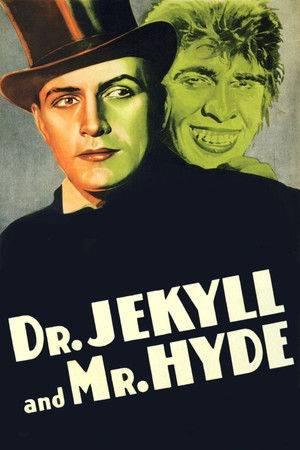
Dr. Jekyll and Mr. Hyde
Put yourself in her place! The dreaded night when her lover became a madman!
Dr. Henry Jekyll believes that there are two distinct sides to men - a good and an evil side. He believes that by separating the two, man can become liberated. He succeeds in his experiments with chemicals to accomplish this and transforms into Hyde to commit horrendous crimes. When he discontinues use of the drug, it is already too late.
- 7.2
- 1931
- Released
- 1h 36m
Fredric March
Dr. Henry Jekyll / Mr. Edward Hyde
Miriam Hopkins
Ivy Pearson
Rose Hobart
Muriel Carew
Holmes Herbert
Dr. John Lanyon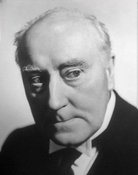
Halliwell Hobbes
Brig. Gen. Sir Danvers Carew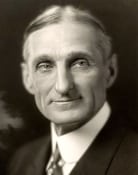
Edgar Norton
Poole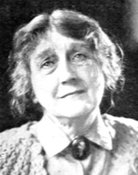
Tempe Pigott
Mrs. Hawkins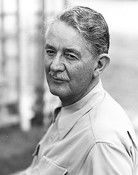
Leonard Carey
Briggs, Lanyon's Butler (uncredited)
Sam Harris
Party Guest (uncredited)
Boyd Irwin
Police Inspector (uncredited)
Arnold Lucy
Utterson (uncredited)
Murdock MacQuarrie
Dissenting Doctor at Lecture (uncredited)
Eric Mayne
Lanyon's Associate at Lecture (uncredited)
Robert Adair
Ivy's Admirer at Music Hall (uncredited)
Pat Harmon
Music Hall Customer (uncredited)John Rogers
Music Hall Waiter (uncredited)G.L. McDonnell
Hobson, Carew's Butler (uncredited)
Douglas Walton
Blonde Student (uncredited)Harry Adams
Pub Patron (uncredited)William Begg
Party Guest (uncredited)
Rita Carlyle
Jekyll's Patient (uncredited)Frank Goddard
Undetermined Role (uncredited)Bobby Hale
Pub Patron (uncredited)
Tom London
Undetermined Role (uncredited)William Marion
Party Guest (uncredited)Eric Wilton
Briggs - Lanyon's Butler (uncredited)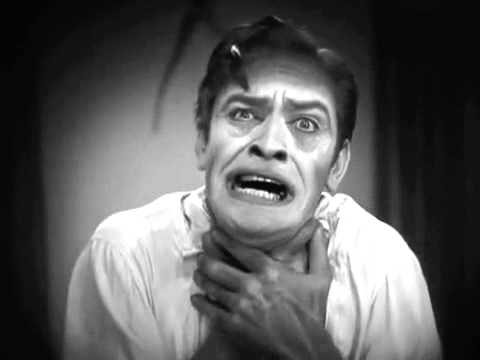
Released
en
$535,000.00
$1,300,000.00
- #london, england
- #double life
- #based on novel or book
- #transformation
- #alter ego
- #black and white
- #jekyll and hyde
- #pre-code
- #marriage engagement
- #torment
- #abused woman
Similar Movies


Reviews

I have no soul. I'm beyond the pale. I'm one of the living dead! It's one of the most famous pieces of literature ever written, a genius piece of story telling from the trippy mind of Robert Louis Stevenson. That it has consistently been ripe for film and stage adaptations, and continues to be so since it first surfaced in written form in 1866, is testament to what a devilishly intelligent piec